Nasdaq Falls 2% as AI Debt Fears Hit Chip and Tech Stocks
The Nasdaq Composite dropped 2.1% on October 16 and lost 4.5% on the week. Why CoreWeave, Palantir and chip stocks sold off, plus the VIX, bond yields, oil and next week's key earnings.

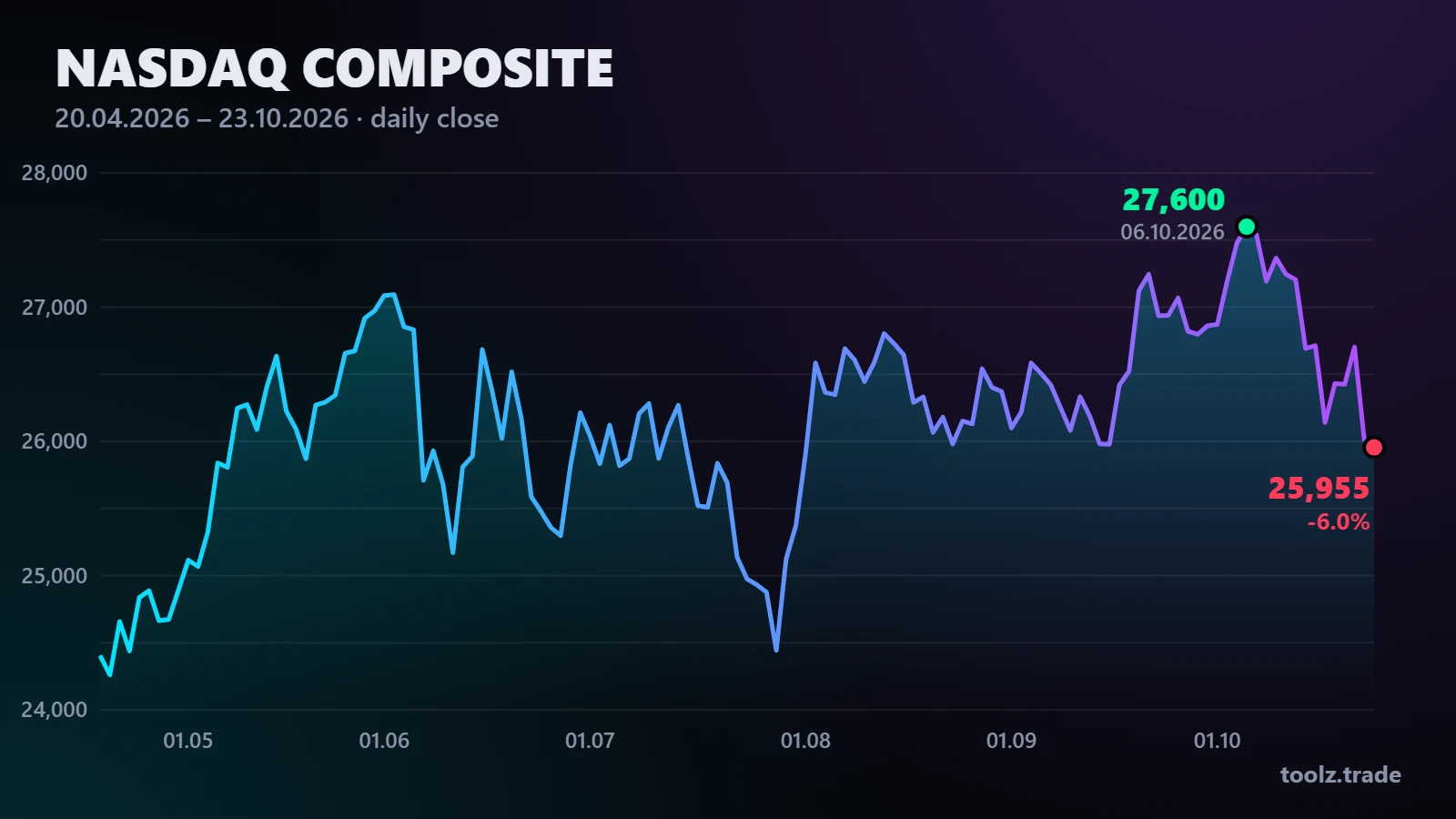
A tech-led sell-off gave Wall Street a rough end to the week. On Friday, October 16, the Nasdaq Composite fell about 573 points, or 2.1%, to close near 26,140, its worst day since early June. The question on investors' minds is no longer how big AI spending will get, but how that spending is being financed and when it will turn into profit.
Friday's closing numbers
- Nasdaq Composite: down 2.1% to about 26,140
- S&P 500: down 1.1% to about 7,659
- Dow Jones: down 0.4% to about 52,000
- Russell 2000: down 1.7%
On the week the Nasdaq lost 4.5%, ending a winning run of about a month and posting its worst week since late June.
What is behind the sell-off?
At the centre of the selling is the debt being taken on to build AI infrastructure. CoreWeave, a heavily indebted cloud provider, closed down about 12%, while Palantir slid about 7%. Chipmakers extended their slide, with semiconductor stocks on their longest losing streak in roughly two decades. Software names were also hit hard, with most stocks in the sector finishing in the red.
Where did the money go?
Money leaving tech moved into defensive corners of the market. Healthcare stocks and gold miners attracted buyers, and Visa and Mastercard touched record highs during the session. That rotation helped the Dow end the week slightly higher. The nervous mood also showed up in the VIX fear index, which jumped 21% to near 20 and briefly hit 22.3, its highest intraday level since mid-June.

Yields, oil and the Fed
A hotter-than-expected inflation report earlier in the week kept the 10-year Treasury yield around 5.1%. Tension in the Strait of Hormuz sent Brent crude to $110 a barrel for the first time since May. With Fed Chair Kevin Warsh not committing to a move this month, traders cut the odds of an October rate hike to about 15%, although futures still price one quarter-point hike by year-end.
What to watch next week
- October 20: Netflix earnings
- October 21: Tesla and Meta earnings
- October 28-29: Microsoft, Alphabet and Amazon results, plus the Fed decision at the end of the month
You can follow the latest dates in our earnings calendar and see how the link between stocks, crypto and commodities has shifted during this sell-off in the correlation matrix.
This article is for information only and is not investment advice. Closing figures are rounded.