Why Did the Nasdaq Fall, Has the AI Bubble Burst, Will the Selloff Continue?
The Nasdaq is 6% below its record. How Meta's AI spending, a chip selloff and $116 oil hit tech, whether the AI bubble has burst and what decides next week.
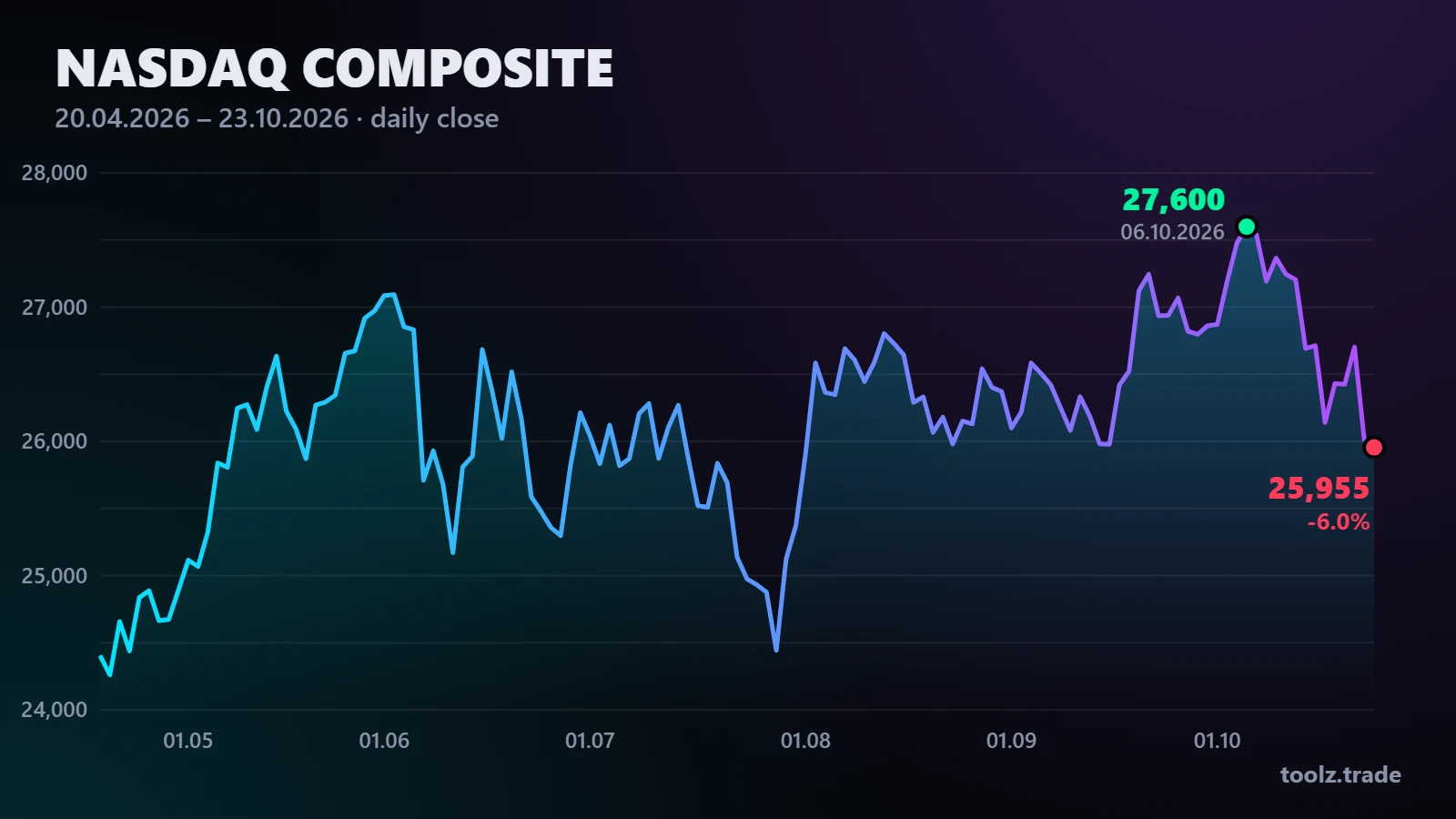
The selloff in Wall Street technology stocks has entered its second week. The Nasdaq Composite closed Friday, October 23, down 0.2% at 25,955 points, about 6% below the record of 27,600 it set on October 6. Artificial intelligence is again at the center of the selling. This time, however, investors are not questioning the technology's future but how the enormous spending will be financed and when it will turn into profit.
The week in brief: the Nasdaq posts a second straight weekly loss
- Nasdaq Composite: down 0.2% on Friday at 25,955; down 2.6% on Thursday
- S&P 500: down 0.5% at 7,624
- Dow Jones: down 1.2% at 52,215, yet up for a third straight week
- VIX fear index: 19.45
Thursday was the toughest day of the week. The Nasdaq lost 694 points (2.6%), its worst session since June 5. The Dow was flat the same day, which clearly showed which sector investors were cutting risk in. Coming a week after a 2% drop, this second wave suggests the market's nervousness is not a one-off.
Why did the Nasdaq fall? Three main reasons
1. Meta and the question of how to finance AI
The biggest trigger was Meta's earnings report. Although revenue beat expectations, the company raised its 2026 capital spending forecast to $135–145 billion and reported its first cash outflow in more than a decade. A plan to issue new non-voting shares to fund its AI investments added to investors' doubts. Meta's stock lost about 7% on Thursday.
2. A sharp selloff in chip stocks
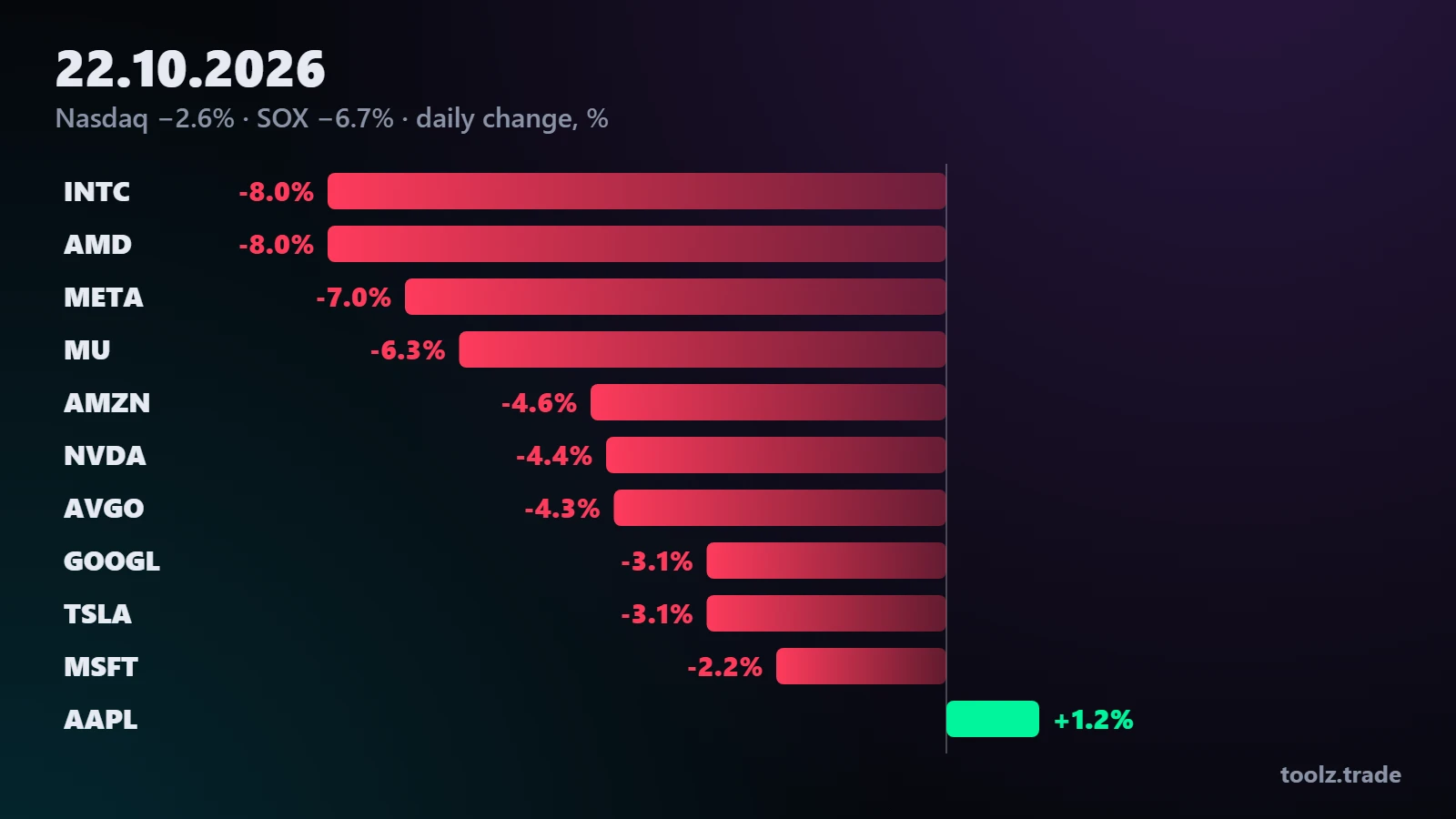
The Philadelphia Semiconductor Index (SOX) fell 6.7% on Thursday, more than 26% below its June 22 record. Intel and AMD dropped about 8%, Micron 6.3%, Nvidia 4.4% and Broadcom 4.3%. At companies that rent out AI infrastructure, such as CoreWeave, worries about rising financing costs and a possible slowdown in investment took center stage. For balance: despite the slide, the SOX is still up about 50% this year.
3. Oil and geopolitical risk
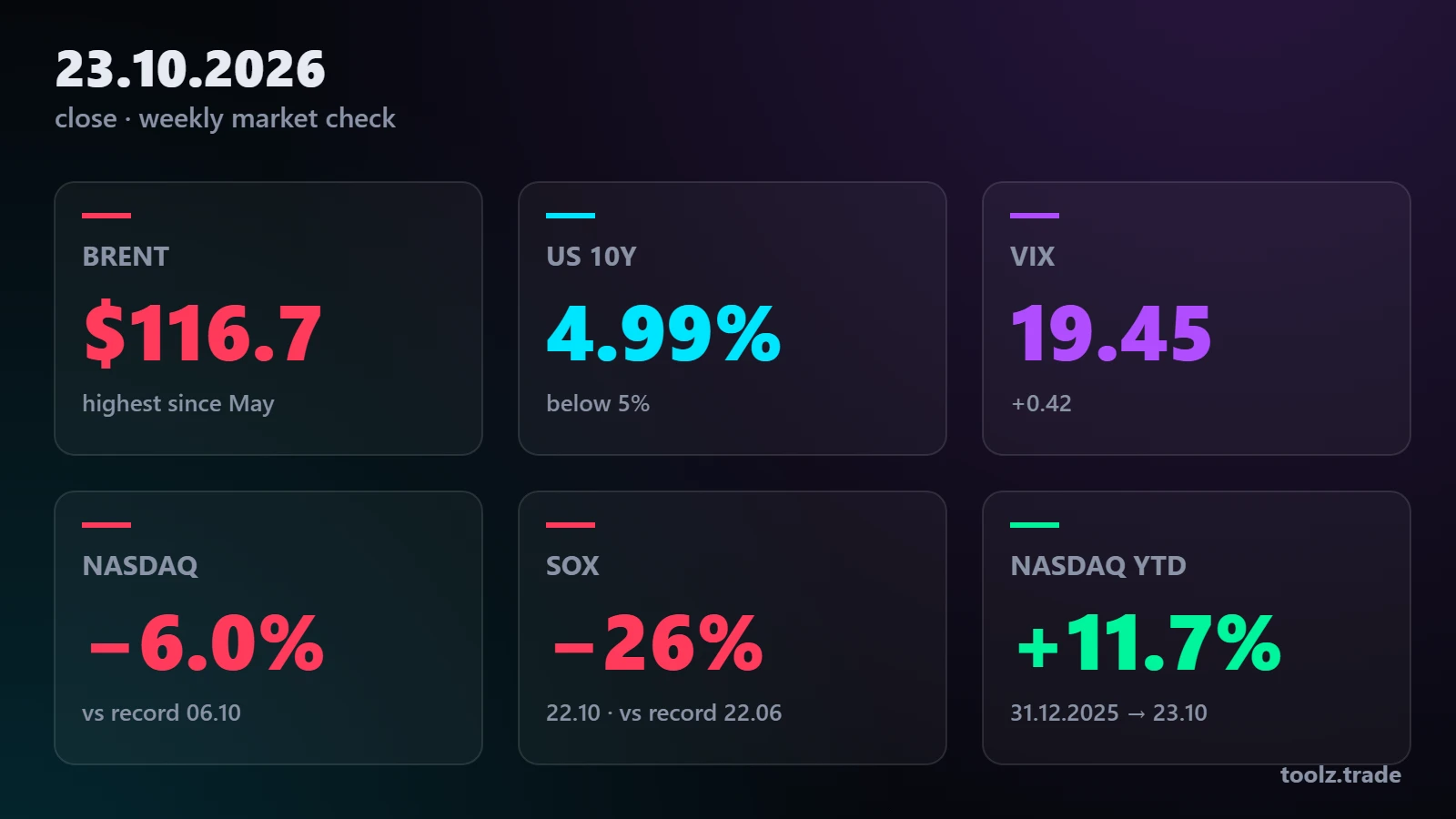
The escalating conflict in the Middle East and attacks around the Red Sea pushed oil prices higher. Brent crude ended the week at $116.70 a barrel, near a six-month high, and US crude WTI rose above $103. High energy prices hurt both inflation expectations and company costs. Airline stocks falling on Friday were the clearest example.
Where did the money go?
Money leaving tech moved into more defensive havens. On Thursday the consumer staples sector of the S&P 500 rose about 2.5%; Procter & Gamble, which beat expectations, gained 6% and Lockheed Martin, which raised its sales forecast, about 6%. Demand for safety sent the US 10-year Treasury yield to its biggest one-day drop in more than two years, below 5%, and it finished the week at 4.99%. On Friday cybersecurity stocks stood out: Cloudflare, Palo Alto Networks and SailPoint each gained more than 7%.
Has the AI bubble burst?
The short answer: not yet, but the market is repricing the AI story. Those who argue it is a bubble say spending on data centers and graphics processors is unsustainable and that the picture recalls the dot-com era of 2000. Paul Nolte, market strategist at Murphy & Sylvest, says investors are starting to see holes in the AI story.
The opposing view is strong too. According to Jay Goldberg, an analyst at Seaport Research Partners, the latest selloff stems from investor psychology more than from any tangible change; he sees the market climbing a "wall of worry". The numbers support that view: Nvidia lifted revenue 106% to $96.2 billion last quarter and expects around $108 billion next quarter. According to LSEG data, expected third-quarter profit growth for S&P 500 companies has risen to 32.3%. Gartner expects global AI investment to reach $2.7 trillion in 2026 and $3.6 trillion in 2027.
The technical picture also says it is too early to talk about a crash. The Nasdaq is about 6% below its record; the 10% threshold that markets treat as a correction has not been crossed. The index is still up about 11.7% this year. The real break is in chip stocks: the 26% pullback in the SOX shows that this sub-sector has effectively entered a bear market.
Will the selloff continue? Next week's key calendar
The coming week could decide whether the selloff changes direction:
- October 28, Fed decision: markets expect rates to be held. Futures price the chance of an October rate hike at only about 5%, down from 37% at the end of September.
- October 28, after the close: Alphabet and Microsoft earnings
- October 29, after the close: Amazon and Intel earnings; Apple's results are also due the same week
- November: Nvidia's quarterly report will be the biggest test for the AI trade
If these reports give strong signals that capital spending is turning into revenue, the selloff may stay a short correction. On the other hand, a further rise in oil, higher borrowing costs for AI companies or weak guidance from big tech could deepen the pressure. For the Nasdaq, the 10% correction threshold sits at about 24,840 points; that level will be watched closely in the days ahead. You can follow all dates in our earnings calendar.
This article is for information only and is not investment advice. Data as of the October 23, 2026 close.